Late Roman Period
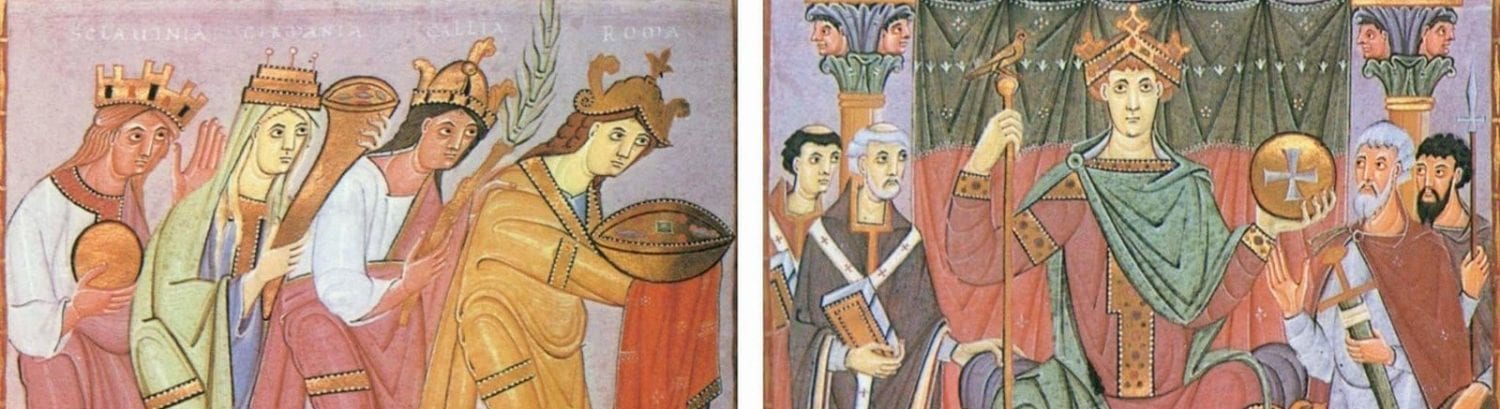
In Roman times, the city that would become Paris was known as Lutetia. Life in Lutetia would have centered around the buildings that demarcated it as a distinctly Roman town: the forum, arena, baths, basilica, and the pagan temple on the Île de la Cité. The forum was a central open space surrounded by houses and stores and would have been the commercial hub of the city as well as an administrative center. The basilica would have stood on one end of the forum and served as the city’s court. Lutetia’s arena which could have seated upwards of 15,000 people and was an oddity in that it held both gladiatorial contests and theatrical productions in the same space. It would have been the city’s primary entertainment venue and most of the population would have flocked to see shows and fights. The real social center of the city was the incredibly preserved and absolutely massive roman bath complex known as the Thermes de Cluny. The baths were probably built by the city’s powerful boatmen’s guild who’s wealth from carrying trade goods along the river allowed them to influence a lot of the day to day business of Lutetia. Citizens from all sorts of different socioeconomic backgrounds would have freely mingled, exercised, and relaxed in the baths which were powered by aqueduct that flowed into the city. The walls were richly decorated with colorful mosaics and statuettes of the Roman gods. The art and architecture of the time mostly followed Roman tradition. Buildings would have had columns and arches and though very little art from the time has survived what does seems to resemble art from around the empire.


Basilica and Abbey of Saint-Denis
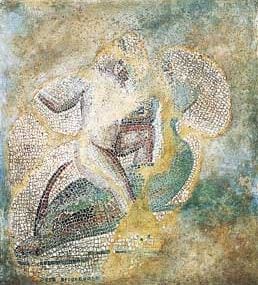
The first basilica of Saint-Denis was built sometime between 460 and 480 by St. Genevieve around the time when Lutetia began to be called Paris. Built from an older Roman structure, many Merovingian and Carolingian kings were buried beneath the cathedral in a sprawling necropolis. This necropolis contains most of the city’s artifacts from the time that have survived into the present day. One of the best preserved tombs was that of Queen Aregonde, the mother of Chilperic I. She was buried with brooches, precious rings and jewels, and dyed silk garments. The value of her grave goods hints at the increasing cultural significance of Paris and offers a hint of the material wealth that the elites of the city would have had access to. The wealthy could afford gems and silk from India as well as lavish burials beneath the sacred structures of the city. Art during the Carolingian time served to reflect the wealth of the owner and consequently the favor God showed them.

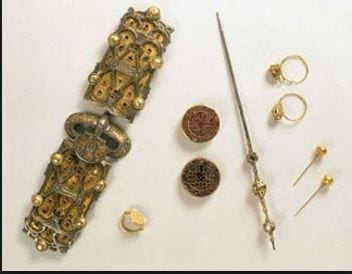

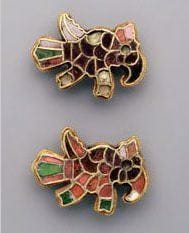
Many of the aristocratic graves contained various useful tools including tweezers, razors, keys, and even short swords. This reveals the increasing skill of Parisian metalworkers who were able to create increasingly sophisticated tools for everyday use. In addition, some of the jewelry in the graves shows Nordic influence, in particular animal motifs that resemble artifacts from Scandinavia. The fact that Scandinavians were settling in or moving through Paris with increasing frequency is emblematic of the growing diversity and importance of Paris, brought in part by Saint-Denis. Throughout its early existence, Saint-Denis held major cultural and religious significance to region since it held the relics of an important saint. The burial of rulers and aristocrats beneath the church only helped underscore its position as a sacred place within society and greater Francia. Though the Saint-Denis necropolis’ importance waned in the Carolingian period, rulers and powerful aristocrats continued to be buried there with spectacular treasures created with increasingly precise skill and craftsmanship.



Objects of the Common People

(Saint-Denis: a town in the Middle Ages)
Archaeological evidence of workshops also points towards material culture of the period. For example, a pin-making workshop in the late 4th century would have sat near the basilica of Saint-Denis. Made out of cow bones, each pin was intricately carved, with most designs including the bust of a woman. These pins would have been essential in creating a popular Gallo-Roman hairstyle.

(Saint-Denis: a town in the middle ages)
This period is defined by impressive metal work, such as belt buckles that would have been mass produced in the 7th century. These would have been made through casting bronze in a wax mold. Other workshops in the area also suggest the capacity to build and repair glass windows, including stained glass.
Bibliography
“History of the Monument.” Centre des monuments nationaux. Accessed March 11, 2019. http://www.saint-denis-basilique.fr/en/Explore/History-of-the-monument.
James H.S. McGregor, Paris from the Ground Up (Cambridge, Mass.: Harvard University Press, 2009), 14-16.
“Medieval Abbey Cloister: South of the Saint-Denis Basilica.” Accessed March 11, 2019. https://uk.tourisme93.com/basilica/a-medieval-abbey-cloister.html.
Nicole Meyer Rodrigues and Michaël Wyss. “The Town and the Abbey” Saint-Denis: a town in the Middle Ages. Accessed March 10, 2019. http://www.saint-denis.culture.fr/en/1_ville_abbaye.htm
“Saint-Denis Crystal.” British Museum. Accessed March 11, 2019. https://www.britishmuseum.org/research/collection_online/collection_object_details.aspx?objectId=61985&partId=1&searchText=crucifixion+engraved+gems&sortBy=imageName&view=list&page=1.
Stratford, Neil. “Le Trésor de St-Denis. Paris, Louvre.” The Burlington Magazine 133, no. 1058 (1991): 337–39.

· Permalink
Hi Jakob,
I don’t want to accidentally undo any progress you’ve made, and I certainly don’t want to erase my own, but wordpress tells me you are editing it currently, so I will work on the Merovingian and Carolingian period on a separate doc.